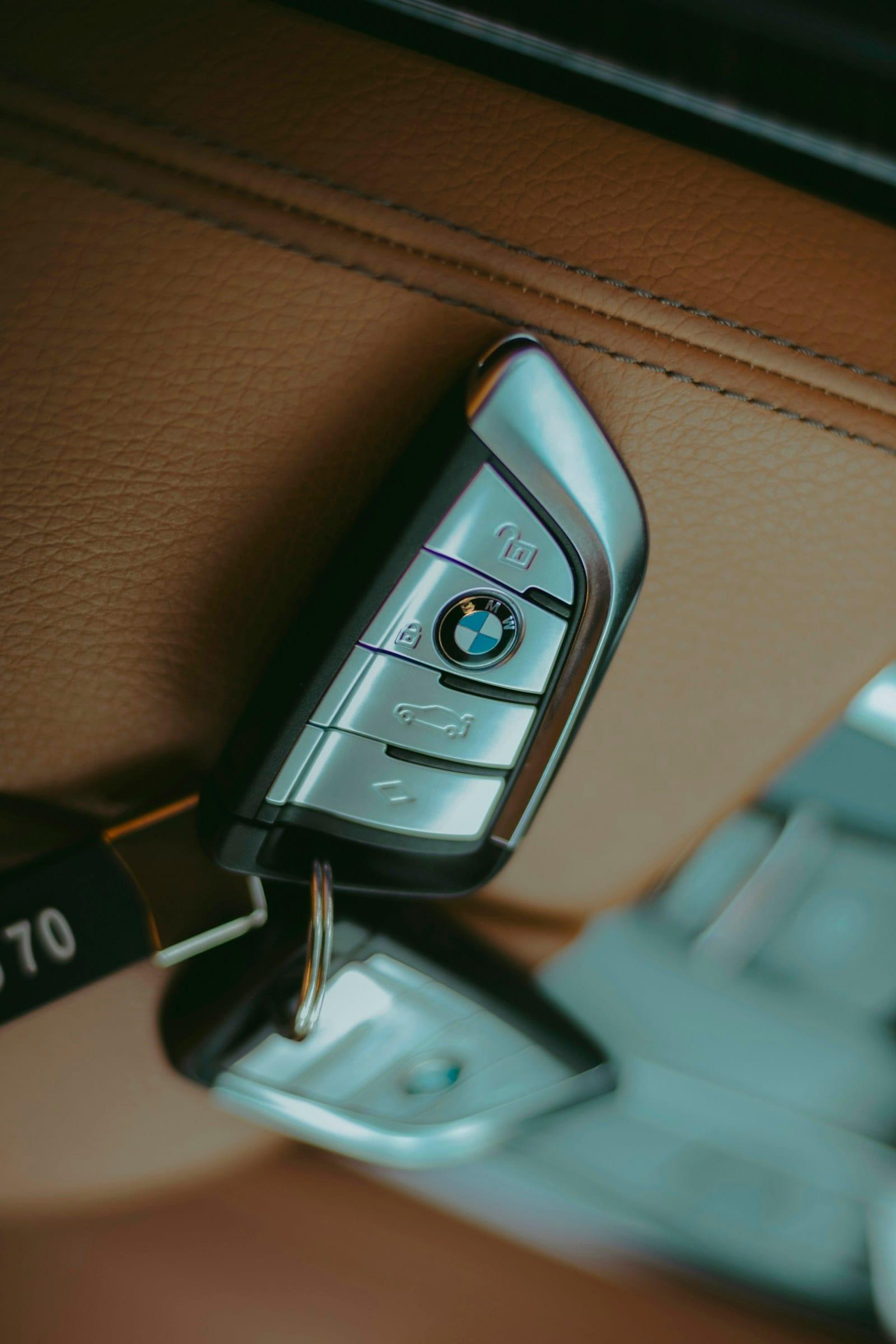
Lost your car keys outdoors? They're one of the easiest things to find.
Photo: David DINTSH on Unsplash
Walk the last stretch back once, check every pocket and the car, then mark where you sat or bent down. If they are still missing, a metal detectorist nearby can walk that ground, and a bunch of keys is one of the loudest targets a detector gets. If they came out of a pocket on a walk, a picnic or a beach, they are lying where that happened. Here is what to do first, and how to get someone nearby to walk the ground with a coil.
The first hour
- 1
Walk the last stretch back, once, slowly
Keys fall out when you sit, crouch, climb or take a jacket off. Retrace the route to the last place you know you had them, looking at the ground the whole way. Once. Wandering the same ground five times adds nothing and trampling adds confusion.
- 2
Check where keys hide
Every pocket, including the ones you never use. The seams at the bottom of a bag. Under and between the car seats. The counter of the last shop or kiosk you paid at.
- 3
Mark where you sat or bent down
A picnic spot, a bench, a towel, the place you tied a shoelace. Keys leave a pocket at exactly those moments. Drop a pin for each one you can remember.
- 4
Photograph the spot before the light goes
A picture with a landmark in it lets a searcher stand where you stood tomorrow morning, even if you can't be there. Grass and sand look the same everywhere without one.
What a metal detector can do with a set of keys
A car key is a battery, a circuit board and a steel blade, and a bunch of them is one of the largest, clearest signals a detector gets. Even a single key on a plastic fob reads well. The ground mostly decides how long it takes.
- In grass or a park
- Keys drop straight to the base of the grass and vanish from sight. To a detector they are loud and unmistakable. A picnic lawn, a football pitch or a field edge is about the best ground there is for this.
- On a beach
- Keys sink into dry sand and stay put. Near the water line the tide moves the sand, but a bunch of keys is heavy and does not travel far. The towel spot and the walk to the water are where a searcher starts.
- On a trail or in woods
- Leaf litter hides keys completely and a detector reads straight through it. The hard part is knowing which stretch of path: a pin for where you stopped, climbed over something or sat down turns a kilometre into twenty metres.
- In snow
- Snow swallows a dropped bunch without a sound and a detector hears it anyway. Mark the spot with something that survives the weather, and say roughly how deep the snow was.
What makes a search more likely to work
- A tight area
- The place you sat down is a two-metre circle. The route you walked is a kilometre. Every stopping point you can name is where a searcher goes first.
- Photos of the spot
- Not of the thing: of the ground. A photo with a landmark in it lets a searcher stand where you stood.
- Describe the bunch
- How many keys, a fob, a bottle opener, a supermarket token. It tells a searcher they've got the right set the moment it comes out of the ground.
- Answer quickly
- Searchers offer a day they can actually go. Answer soon, and that day is still free for them.
From where it fell to your hand
- 01
They fall out
A jacket comes off, you sit down on the grass. The keys are under the blades, exactly where you sat.
- 02
You mark it and post
A pin on your phone, a photo of the spot, the story. Searchers nearby see only a rough area, never the pin.
- 03
Someone nearby goes to look
A detectorist who already searches that ground offers. You pick them, and only they get the exact spot.
- 04
They're back in your pocket
They hand them back in person. Any thank-you is between the two of you; nothing goes through us.
How soon the request goes up and how tightly you can draw the area decide most of it. Same day, with a spot somebody can stand on, is a very different job from a whole beach a fortnight later. Retrievly is free, and it handles no money at all. The full version.
What makes the difference
- It is not a guarantee
- Keys are a large target and a good searcher finds a lot of them. What decides the rest is how soon the request goes up and how tightly you can draw the area. A detector covers ground slowly, so a small circle is worth more than a big one.
- Nobody is vetted
- Retrievly does not check, insure or verify searchers or owners. Read their profile and rating, meet somewhere public, and trust your judgement.
- No money passes through us
- There is no fee and no cut. Many owners give a thank-you once the item is back in their hands, agreed between the two of you. Nothing is a real option too.
Common questions
- Can a metal detector find car keys?
- Easily. A bunch of keys is one of the loudest, clearest targets a detector gets, and even a single car key with a battery and a steel blade reads well on its own.
- How deep do keys end up in grass or sand?
- In grass they drop to the base of the blades and stay there, invisible from standing height. On a beach they stay in the layer the waves turn over, roughly the top 10 cm on an ordinary day on a gently sloping beach (Ferreira et al., 2000), and in dry sand only feet and digging push them down.How deep does a ring sink in sand?
- How soon should someone search?
- As soon as you can, while you still remember where you sat, crouched or took a jacket off. A request posted the same day with a marked spot is a very different job from a whole park a fortnight later.
- What does it cost?
- Posting a request on Retrievly is free, and no money goes through the site. Any thank-you is agreed directly between you and the person who searches.
You can post without an account; we just ask where to reach you at the end. Signing in is for searchers.